Source Round Duct Elbow Machine for HVAC, Ventilation, and Industry
Find 30 round duct elbow machines from verified suppliers with varying power, capacity, and dimensions. Compare specifications like spindle speed, thickness range, and automatic grade to select the right equipment for HVAC, ventilation, and industrial applications.
Key considerations
Products List


HVAC Electric Elbow Duct Machine Spiral Round Elbow Duct Making Machine
$2450.00 - $3200.00
MOQ: 1 Pieces

Hydraulic Spiral Round Metal Duct Elbow Making Machine Round Duct Elbow Bending Machine
$9800.00 - $15000.00
MOQ: 1 Pieces


Automatic Hydraulic Elbow Making Machine for Round Duct Making Machine
$2450.00 - $3200.00
MOQ: 1 Pieces


$8500.00 - $9500.00
MOQ: 1 Pieces


$8500.00 - $9500.00
MOQ: 1 Pieces

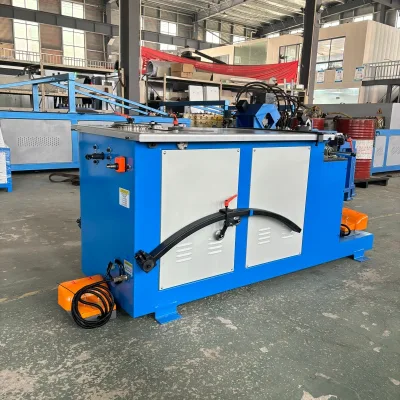
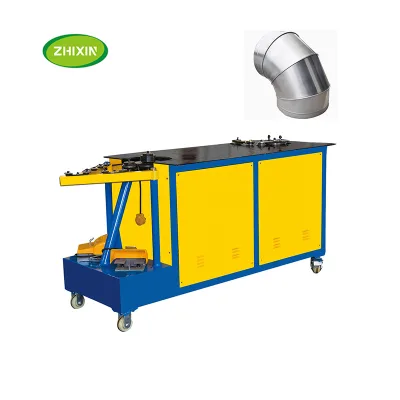


Round Air Pipe Ventilation Hydraulic Duct Elbow Machine for HVAC Tube Forming
$17800.00 - $19000.00
MOQ: 1 Pieces


Comprehensive Sourcing Guide
Strategic Sourcing Guide for Round Duct Elbow Machinery
Procuring industrial machinery for HVAC duct fabrication requires a disciplined approach that balances technical capability with supply chain reliability. The Round Duct Elbow Machine represents a specialized segment of metal forming equipment, designed to transform flat metal sheets into curved elbow joints essential for ventilation systems. Buyers entering this market must navigate a landscape defined by varying automation levels, power requirements, and dimensional tolerances. This guide synthesizes observed market data and technical parameters to provide a framework for evaluating potential suppliers and selecting equipment that aligns with specific production needs.
Technical Specifications and Operational Capabilities
The core functionality of a Round Duct Elbow Machine centers on its ability to form precise curves from sheet metal. Based on observed product attributes, the machinery is often categorized by its automatic grade, with options ranging from semi-automatic to full-automatic systems. A critical specification to verify is the spindle speed, which dictates the rate of material processing. Data indicates that certain models operate at a spindle speed of 36 revolutions per minute, a figure that influences both throughput and the quality of the formed edge.
Power consumption is another vital technical parameter. The market presents a variance in motor power ratings, with specific configurations observed at 1.5 kW, 4 kW, and dual-motor setups such as 2x1.5 kW or 1.5/1.5 kW. These differences often correlate with the machine's capacity to handle different material thicknesses and widths. For instance, a machine with a 5.5 kW power rating may be required for heavier gauge materials or higher volume operations compared to a 1.5 kW unit. Buyers must ensure that the electrical infrastructure at their facility can support the specific voltage requirements, which are commonly listed as 380 V for industrial applications.
The physical dimensions of the equipment are equally important for facility planning. Observed standard dimensions for various models include configurations such as 2700x750x1200 mm, 2100x820x890 mm, and 2050x800x1030 mm. The weight of the machinery, ranging from 530 kg to 1200 kg depending on the model, impacts floor loading requirements and shipping logistics. Furthermore, the machine's capacity to handle specific material ranges is a key differentiator. Some units are designed for a thickness range of 0.4-1.2 mm, while others may be optimized for a single thickness of 1.2 mm. The diameter range capability, observed in some models as 200-1500 mm, defines the versatility of the machine in producing elbows of various sizes.
Material Compatibility and Production Standards
The raw material compatibility of the machine determines its applicability across different HVAC projects. The equipment is generally designed to process Stainless Steel (SS) and Carbon Steel (CS), which are the standard materials for ductwork. The ability to handle these specific alloys without compromising the forming process is a fundamental requirement. Additionally, the machinery often includes an oil tank with a capacity of 70 liters, which is essential for hydraulic systems that may be employed in the forming or clamping mechanisms.
Compliance with industry standards is implicit in the design of these machines, though specific certification documents must be verified on a case-by-case basis. The final product output is the duct elbow, a component that must meet strict dimensional tolerances to ensure airtight connections in ventilation systems. The standard production output for some hydraulic models is observed to be between 10-20 pieces per hour. This throughput rate is a function of the machine's automaticity and the complexity of the elbow geometry being produced. Buyers should note that while some machines are labeled as "Full-Automatic," the actual operational mode may involve hydraulic assistance, which requires specific maintenance protocols.
Cost Drivers and Pricing Structures
Understanding the cost structure of round duct elbow machines is essential for budgeting and ROI analysis. The observed price range in the market spans from 1,400 USD to 20,000 USD. This significant variance is driven by several factors, including the level of automation, power capacity, and the complexity of the forming mechanism. A machine priced at the lower end of the spectrum likely features a simpler design with lower power consumption and manual or semi-automatic operation. Conversely, units at the higher end typically offer full automation, higher spindle speeds, and more robust construction capable of handling a wider range of material thicknesses and diameters.
The Minimum Order Quantity (MOQ) is another critical cost driver. In the current market, the observed MOQ is consistently 1 unit, allowing buyers to purchase single machines without the need for bulk commitments. This flexibility is advantageous for small to medium-sized workshops or for testing new production lines. However, buyers must also consider the total cost of ownership, which includes shipping, installation, and potential customization fees. Customization is available for many models, allowing suppliers to tailor the machine to specific production requirements, which can influence the final price.
Supplier Evaluation and Origin Verification
When evaluating potential suppliers, the place of origin is a primary data point. The majority of the observed machinery originates from China, with specific manufacturing hubs identified in regions such as Anhui. This geographic concentration suggests a mature supply chain for HVAC equipment, but it also necessitates rigorous due diligence regarding the supplier's reputation and track record. Buyers should verify the supplier's ability to provide machinery test reports, as the availability of such documentation is a strong indicator of quality assurance.
The brand name is another factor to consider, with "ZHIXIN" appearing as a specific manufacturer in the market. While brand recognition can provide some assurance of quality, it should not be the sole criterion for selection. Buyers must assess the supplier's responsiveness to inquiries, their willingness to provide detailed technical specifications, and their support infrastructure. The presence of core components like the motor, which is often a critical and replaceable part, should be scrutinized. Ensuring that the motor is sourced from a reputable manufacturer can prevent future operational issues.
Quality Control and Warranty Considerations
Quality control in the procurement process extends beyond the initial purchase to the long-term reliability of the machine. The warranty period is a key metric for assessing supplier confidence. Observed warranty terms vary, with some models offering a 1-year warranty and others providing coverage for 2 years. A longer warranty period often indicates a higher confidence in the machine's durability and the supplier's commitment to after-sales support. Buyers should carefully review the terms of the warranty to understand what is covered, including parts, labor, and potential exclusions.
The condition of the machine upon delivery is another critical quality factor. All observed units are listed as "New," which implies they are not refurbished or used. However, buyers must verify the packaging standards to ensure the machine arrives without damage. Common packaging methods include wooden cases and plastic film covers, which provide protection during transit. The wooden case is particularly important for heavy machinery weighing up to 1200 kg, as it offers superior structural support. Additionally, the availability of a machinery test report is a valuable asset for verifying that the machine meets performance standards before it leaves the factory.
Long-Term Procurement and Maintenance Planning
Long-term procurement success depends on planning for maintenance and operational efficiency. The advantage of the machinery, such as easy operation and high efficiency, should be validated through practical testing or detailed operational manuals. The machine's function is primarily forming, and the ability to maintain this function over time relies on regular maintenance of the hydraulic system and motor components. The oil tank capacity of 70 liters suggests a need for regular fluid checks and changes to prevent contamination and ensure smooth operation.
Buyers should also consider the adaptability of the machine to future production needs. The ability to customize the machine allows for adjustments in production capacity or material handling as business requirements evolve. The standard dimensions and weight of the machine should be factored into the facility layout to ensure efficient workflow. Finally, the procurement strategy should include a plan for spare parts management, particularly for core components like the motor, to minimize downtime in the event of a failure. By integrating these considerations into the sourcing process, buyers can ensure a reliable and efficient investment in round duct elbow machinery.
Comparative Analysis of Machine Attributes
To facilitate decision-making, the following table summarizes key attributes observed across different models in the market. This comparison highlights the variance in specifications that buyers must evaluate against their specific production requirements.
| Attribute | Model A (Example) | Model B (Example) | Model C (Example) |
|---|---|---|---|
| Product Model | HEDM-1250 | EDM-1000 | DCP 1000t |
| Power Rating | 4 kW | 2x1.5 kW | 5.5 kW |
| Weight | 760 kg | 530 kg | 1200 kg |
| Dimensions | 2700x750x1200 mm | 2100x820x890 mm | 2050x800x1030 mm |
| Thickness Range | 0.4-1.2 mm | 1.2 mm | Variable |
| Diameter Range | 200-1500 mm | N/A | N/A |
| Warranty | 2 Years | 1 Year | 1 Year |
| Packaging | Wooden Case | Plastic Film | By Container |
| Origin | China | China | Anhui, China |
| Automaticity | Full-Automatic | Hydraulic | Hydraulic |
This table illustrates that no single model fits all scenarios. A buyer requiring high throughput and heavy-duty performance might prioritize the 5.5 kW model with a 1200 kg weight, while a smaller workshop might find the 1.5 kW unit sufficient. The decision ultimately rests on aligning these technical specifications with the specific operational constraints and production goals of the buyer. By rigorously applying these criteria, procurement teams can select machinery that delivers optimal value and performance in the HVAC duct fabrication sector.
FAQs
What is the typical price range for a Round Duct Elbow Machine?
The observed price range spans from 1,400 USD to 20,000 USD. This variance depends on automation levels, power capacity, and forming complexity. Buyers should expect higher costs for full-automatic units with robust power ratings like 5.5 kW compared to simpler 1.5 kW models.
Can I customize the Round Duct Elbow Machine for specific needs?
Yes, customization is available for many models to tailor production requirements. Suppliers can adjust specifications to fit unique operational constraints. This flexibility allows buyers to modify features like power or dimensions without needing a completely new machine design.
What is the minimum order quantity for purchasing this machinery?
The minimum order quantity is consistently 1 unit across the observed market. This allows buyers to purchase single machines without bulk commitments. It is particularly advantageous for small workshops or for testing new production lines before scaling up.
Which raw materials can the machine process effectively?
The equipment is designed to process Stainless Steel and Carbon Steel. These are the standard materials for HVAC ductwork applications. The machine handles these alloys without compromising the forming process, ensuring compatibility with common ventilation system projects.
How long is the warranty period for the Round Duct Elbow Machine?
Warranty terms vary, with some models offering 1 year and others providing 2 years coverage. A longer warranty often indicates higher supplier confidence in durability. Buyers must review specific terms to understand what parts and labor are included in the protection.
What is the production capacity of a hydraulic Round Duct Elbow Machine?
Some hydraulic models have a production capacity of 10 to 20 pieces per hour. This throughput rate depends on the machine's automaticity and the complexity of the elbow geometry. Buyers should verify the specific output rate against their daily production targets.